

Experience Úbeda: 3 places that touch the soul in summer
23/08/2025
Hay ciudades que se miran de refilón, como quien ojea un periódico en el café de la esquina. Otras que…

Úbeda has a reputation as a refined cultural destination, and it’s true. But that doesn’t mean you have to spend a fortune to enjoy it. February is the perfect month to discover that this World Heritage city can be lived on a budget without giving up authentic experiences. In fact, some of the best plans in Ubeda are free or almost free. Here is the definitive guide to squeezing the city without emptying your wallet.
Let’s start with the obvious but essential: the historic center of Úbeda is an open-air museum that does not charge admission. Strolling through Plaza Vázquez de Molina, considered one of the most beautiful Renaissance squares in Europe, is completely free. And it is not just a square, it is a monumental complex that includes the Sacred Chapel of the Savior, the Juan Vázquez de Molina Palace, also known as the Palace of the Chains, the Basilica of Santa María (don’t forget to contemplate the Renaissance fountain in the center of the square) and the Palace of Dean Ortega.
You can spend hours walking through the network of streets of the monumental neighborhood without spending a euro. Where you will find Calle Valencia, Calle Real, the San Millán neighborhood with its photogenic corners, the Plaza del Primero de Mayo, the Hospital de Santiago, the Plaza de San Pedro, the Plaza de Santo Domingo, Carvajal or Juan de Valencia, hidden squares with a charm that you cannot miss. Every corner hides a palace, a Renaissance doorway, a noble coat of arms or a façade that deserves a photo.
Several churches in Úbeda open their doors free of charge or by a voluntary donation. The Church of San Pablo, with its impressive Elizabethan façade and its interior full of sacred art, is free to access, like the Church of the Trinity, San Isidoro, San Nicolás or the deconsecrated San Lorenzo. These spaces, in addition to their religious value, function as authentic art galleries. Baroque altarpieces, processional carvings, goldsmithing, paintings from Sevillian and Granada schools… A first-class artistic heritage accessible to all budgets.
Recommended schedule: visit them outside of mass hours to be able to walk around them with peace of mind. They are usually open in the morning (10:00-13:00h) and in the afternoon (17:00-19:00h).
Úbeda is built on a hill that dominates the Jaén countryside. That means natural viewpoints with spectacular views that do not require paying an entrance fee to any tower or viewpoint.
The Mirador de las Eras del Alcázar offers panoramic views over the Guadalquivir valley and the infinite sea of olive trees that characterise the region. At sunset, when the light turns golden and the olive trees seem to shine, it is one of the most beautiful natural spectacles you will see.
The Redondel de Miradores, at the southeastern end of the historic center, is another privileged point totally free.
Perfect low-cost plan: Buy some snacks in any local shop (bread, olives, cheese, sausages) and go up to one of these viewpoints to have a picnic with the best views of the province. It costs less than 10 euros per person and the experience is priceless.
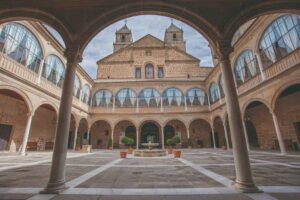
The Hospital de Santiago, that building that the people of Úbeda call their “Andalusian Escorial”, has free admission. Yes, for free. One of the best examples of Renaissance architecture in Andalusia does not charge to visit it.
You can walk through its courtyards, admire the monumental staircase, contemplate the chapel and, if you are lucky, a temporary exhibition in its rooms. It is one of those things that in any other city would cost 8 or 10 euros and here it is offered at no cost.
In addition, the building houses the municipal library, which you can also visit. Its reading room, with coffered ceilings and historic furniture, is a beautiful space where you can spend some time reading, connecting to the free Wi-Fi or simply resting from the walk.
The Mercado de Abastos de Úbeda is small but has all the essence of traditional Andalusian markets. Entry is free, and even if you don’t buy anything (which you should, because the prices are very reasonable), walking among the fruit, vegetables, fish and butcher stalls is a way to understand the city from its most everyday facet.
If you want to buy, here you will find local products at the original price: extra virgin olive oil from small producers, picual olives, artisan cheeses, sausages from the mountains… All much cheaper than in gourmet shops and with the advantage of dealing directly with the person who produces it or knows its origin.
The cloistered convents of Úbeda maintain the tradition of making artisan sweets that they sell through lathes. They are exceptional quality products at surprisingly low prices.
At the Convent of Santa Clara and the Convent of the Concepción, you can buy yolks, amarguillos, roscos and other sweets for 5-8 euros per package. It is an authentic, delicious and economical souvenir. In addition, the experience of shopping through the lathe, without seeing the nuns, talking through a small revolving window, has a point between medieval and mystical that you will not forget.
February in Úbeda usually brings free or very reduced-price municipal cultural programming. Check the agenda of the City Council and the Hospital de Santiago Cultural Center before your visit. Concerts, conferences, book presentations and temporary exhibitions take place throughout the month.
If your visit coincides with January 17 (technically it’s not February, but it’s close), don’t miss the Hoguera de San Antón, an absolutely authentic popular festival where the squares are filled with bonfires, where the atmosphere is that of a traditional verbena. Participating costs nothing and is one of the most genuine experiences you can have.
During February, the XXV Gastronomic Days in the Renaissance are also underway, and although the complete menus of the participating restaurants are not exactly low-cost, many establishments offer “Snacks in the Renaissance” with tapas and portions inspired by period cuisine at very reasonable prices (3-5 euros per tapa).
How to get there:
How to get around:
February: The Perfect Month for the Smart Traveler
Traveling to Úbeda in February has obvious low-cost advantages:
In addition, traveling outside of high season is more sustainable. Úbeda appreciates it, local businesses appreciate it and your experience will be more genuine.
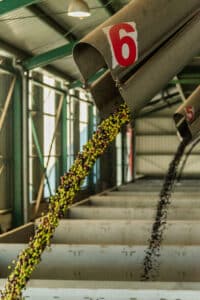
In the end, the best news about Úbeda is that its essence is not behind payment doors. It is in its streets, in its squares, in the light that bathes the golden stones, in the leisurely pace of local life, in the conversations with the neighbors who recommend where to eat, in the smell of freshly pressed oil that comes out of the oil mills.
The experience of discovering Úbeda, of feeling its atmosphere, of connecting with its history, will be just as intense. Perhaps more, because the low-cost traveller mixes more with the real life of the city, eats where the people of Úbeda eat, buys where they buy and experiences the city from the inside.
Úbeda doesn’t need you to spend a lot of money to reveal its magic to you. It just needs you to arrive with curiosity, respect and a desire to be surprised. The rest, he gives you as a gift.