

Úbeda in March: last days to savour the Renaissance (and the gastronomic climax of the year)
24/03/2026
Listen well, traveller with a demanding palate: if February was the month of gastronomic discovery, March in Úbeda is the…

Pay attention, demanding travellers who are not satisfied with hasty selfies: Úbeda is not a city to be crossed in two hours with an underlined tourist guide. It is an architectural poem where each verse deserves to be read slowly, savored, almost religiously.
If you come looking for the “essentials” to cross them off your list like someone fulfilling school obligations, it is better to stay at home watching documentaries. But if your spirit longs for genuine encounters with Renaissance beauty, if you understand that architecture is not looked at but felt, then read on.
Here are the ten monuments that define the soul of this World Heritage city. They are not suggestions: they are demands. To miss them would be an insult to your own good taste.
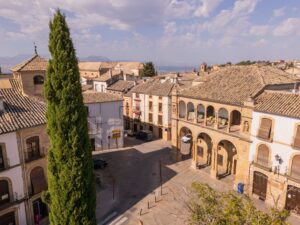
It is not a singular monument but an architectural ensemble that functions as a visual symphony: each building is an instrument that contributes to total harmony.
Surrounded by the Sacred Chapel of the Saviour, the Palace of the Chains, the Church of Santa María and other noble buildings, this square is an open-air Renaissance hall where you can sit on any bench and feel like aristocrats of the sixteenth century.
Recommended activities:
Free access 24/7 because the squares, unlike the monuments, never close.
Stop here first or don’t bother continuing. The Sacred Chapel of the Saviour, an absolute masterpiece by Andrés de Vandelvira, is not simply an essential monument: it is a master class on what the Spanish Renaissance means.
Erected as the funerary pantheon of the Cobos and Molina family – a family so powerful that it was able to hire the best architect of its time – this chapel is a resounding demonstration that money well spent can buy aesthetic immortality.
Which will take your breath away:
Plateresque façade so exuberant that it will take you several minutes just to process its details
Interior with Latin cross plan, imposing dome and Corinthian columns that defy gravity with elegance
Sacristy designed by Vandelvira that is, in itself, reason enough to travel here
Renaissance altarpiece where every inch tells a story
Don’t you dare to enter in a hurry. This chapel demands reverent contemplation, even if you are not believers. Here religion is beauty, and we are all devout.
Currently the seat of the City Council, this palace was a symbol of administrative power when power was built with mathematical proportion and golden stone, not with empty speeches.
Its name comes from the chains that adorned its façade, a privilege granted by Charles V. Today the physical chains have disappeared, but the building continues to chain the gaze of those who pass through the Plaza Vázquez de Molina.
What you can’t miss:
Free access during administrative hours. Enter without shame, it is a public building and you are public. (Currently closed for works)
Built on the site of an old mosque – because in Spain religions overlap naturally geologically – this church is testimony to the fact that the Gothic-Mudejar can age with dignity.
Its bell tower stands as a spiritual beacon over the Plaza Vázquez de Molina, reminding us that before the Renaissance there were other styles that also deserve respect.
Highlights:
Sober but elegant Gothic cloister
Central nave with ogival arches pointing to the sky unapologetically
Side chapels where centuries of devotion are accumulated
This church has drunk from all styles (Romanesque, Gothic, Renaissance) and from each one it has taken the best without remorse.
Its Plateresque façade, also the work of Vandelvira, dialogues with the Gothic interior, creating aesthetic tension that works miraculously well. Do not seek stylistic purity: enjoy the glorious miscegenation.
Details that deserve attention:
This hospital, designed by Vandelvira (yes, again, man was everywhere), was a refuge for the poor and sick when health care depended more on charity than on the State.
Today it is a cultural center, but its architecture continues to tell stories of aristocratic compassion, that Renaissance virtue where the powerful atone for guilt by building useful beauty.
What will win you over:
This sixteenth-century fortified gate was a border between the protected interior and the threatening exterior, when cities needed walls to sleep peacefully.
Today it is an involuntary triumphal arch through which you enter the historic Úbeda, leaving behind the modern world with its haste and noise.
Symbolic meaning:
Crossing it is a ritual of passage: from tourist to traveler, from observer to participant
Its solidity reminds us that Úbeda was a stronghold, not just an open-air museum
Free access because it is a public street, although it deserves a photographic and reflective break.
This noble residence with its imposing façade and cheeky heraldic shield was home to a powerful family that wanted everyone to know about it.
Today it houses Art School and temporary exhibitions, demonstrating that palaces can have a second useful life without losing dignity.
What you’ll see:
This square marks the border between the Renaissance Úbeda and the city that grew later, when the Renaissance was already a nostalgic memory.
Why it matters:
Perfect for resting between more demanding monumental visits.
This palace is a resounding demonstration that Renaissance civil architecture could be as sublime as religious architecture when the clients had money and good taste in equal parts.
Its façade with Ionic columns and a central courtyard open to the sky are a lesson in how those who ruled in the Renaissance lived: surrounded by proportion, light and calculated beauty.
Details that justify the visit:
Noble staircase where each rung is a declaration of status
Tips for not wasting your monumental pilgrimage
Don’t try to see everything in half a day. These monuments deserve time, not speed. Two full days is a decent minimum. Three days is ideal civilized.
Hire an official guide if you want deep historical context. The monuments are eloquent, but an expert will reveal details that your eyes alone will not grasp.
Visit early in the morning (9:30-11:00 am) or at sunset (5:00 pm-7:00 pm) to avoid school groups and less photogenic light.
These ten monuments are not to-do lists: they are necessary encounters with beauty when beauty was taken seriously.
Úbeda is not a city to be visited with the superficiality of the hurried tourist who collects destinations like trading cards. It is a city to be felt, absorbed, lived with all the senses activated.
Each Plateresque façade will speak to you in a visual language that your eyes understand even if your mind does not translate it. Each Renaissance courtyard will offer you a pause where time stretches like honey in the sun. Each square will invite you to sit and simply be, with no higher goal than to exist surrounded by beauty.
What are you waiting for? These monuments have been standing for five centuries. You can wait a little longer, but your life is not infinite. Come before haste and obligations convince you that you can postpone it indefinitely.
Share your pilgrimage with #MonumentosÚbeda and join the community of travelers who understand the difference between seeing and feeling.
Úbeda is waiting for you. Vandelvira built for eternity. You have only this life.