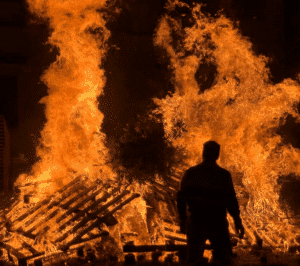


Bonfire of San Antón: fire, ochíos and tradition
24/01/2026
January in Úbeda has a taste of smoke, hot olive oil and tradition that stands the test of time. When…

A festival that is part of the city’s identity
The month of May in Úbeda has a different pulse, and a good part of that rhythm is marked by the International Festival of Music and Dance “Ciudad de Úbeda”. It is not only a cultural event within the calendar, but one of the projects that best explains how this city has managed to turn its heritage into something alive, useful and contemporary.
With more than three decades of experience, the festival is promoted by the Cultural Association Friends of Music of Úbeda and is part of national and international networks of festivals. This journey is not a minor fact: it explains why each edition manages to bring together performers, orchestras and companies of the highest level, and also why the public that attends does so with a clear expectation of quality.
But beyond prestige, there is something that defines him best: his ability to integrate into the city without imposing himself on it. Here the festival does not occupy Úbeda. It blends in with her.
The festival kicks off on May 15 with violinist Sergey Khachatryan with the Armenian National Philharmonic Orchestra, an opening that sets the tone for what comes next. From there, the programme unfolds with names and proposals that combine symphonic music, recitals, dance and meetings between disciplines.
In the following days, visitors will be able to meet the English Chamber Orchestra, with the collaboration between Carmen Linares and Jesús Carmona together with the Symphony Orchestra of the Region of Murcia, or with the concert of Francesca Dego accompanied by the City of Granada Orchestra. At the end of the month, pianist Zhiquan Wang and the Great Dance Stars Gala complete a journey that is not limited to a single style, but proposes a broad and diverse cultural experience.
The programme also continues in June with figures such as Piotr Beczała or Renaud Capuçon, which allows travellers to choose the moment that best suits their getaway, without the feeling of being conditioned by a single date.
There is something that does not appear in the programs, but that completely defines the experience: the place.
The festival takes place in spaces where architecture is not a neutral container, but part of the discourse itself. The Hospital de Santiago, one of the most emblematic buildings of the Andalusian Renaissance, acts as the main venue and sums up well this idea of “heritage festival” that the organization defends.
In this context, music doesn’t just sound: it resonates in a different way. Acoustics, the scale of the space, the relationship with history… everything contributes to each concert having a different dimension. It is not a matter of exaggerating the experience, but of recognizing that the environment conditions it, enriches it and makes it more memorable.
Experiencing the festival as an occasional visitor is simple. Living it well requires a little more intention.
It is advisable to plan it as a complete getaway, not as a one-off visit. Arrive on time, tour the historic center, understand the city before entering the concert. Because that preparation – even if it is not conscious – changes the way music is received.
A walk through the Plaza Vázquez de Molina at sunset, a leisurely meal, a break on a terrace when the light begins to fall… all of that is part of the experience as much as the performance itself. When the time comes for the concert, you are no longer passing through: you are inside.
The International Festival of Music and Dance is not an isolated element within the cultural offer of Úbeda. It is a piece that fits perfectly with what the city proposes throughout the year: heritage, identity and a more leisurely way of living time.
Here culture is not an add-on. It is a way of using the city.
That’s why the festival works. Because you don’t need to transform Úbeda to adapt it to programming. The programming is already designed for this place.
And it shows.
If there is a particularly recommended time to visit Úbeda, this is it. May offers mild temperatures, long days and a city that is beginning to be lived more on the street. Added to this is a living cultural agenda and a light that completely transforms the perception of heritage.
The festival inserts itself into that context without forcing it, as a natural extension of what is already happening. There is no need to organize the trip around a single event. Just choose the right moment and let everything else fall into place.
There are those who remember the concert.
And there are those who remember the whole.
The arrival, the walk, the space, the music, the departure, the city at night. Everything is part of the same experience that cannot be reduced to a single scene.
That is probably the greatest success of the Úbeda Music and Dance Festival: it does not limit itself to offering cultural programming, but creates a context where that programming acquires meaning.
And when that happens, what you take away is not just what you have seen or heard.
It’s the feeling of having been in the right place, at the right time.