

What to do in Úbeda if you are traveling alone: complete guide for a traveling soul
24/10/2025
Listen, traveling soul: have you not felt that ancient call, that whisper of golden stone that invites you to lose…

There are experiences that only happen once every twenty-five years. This is one of them. The Gastronomic Days in the Renaissance of Úbeda celebrate their XXV anniversary between January 30 and March 15, 2026, and they do so consolidating themselves as one of the most unique gastronomic events in Spain: the only place to eat is to literally travel back in time.
For a month and a half, eleven restaurants in Úbeda rescue recipes from the sixteenth and seventeenth centuries, adapting them with care. It is not a cuisine of historical recreation, it is haute cuisine with deep roots that dialogues with the past without renouncing contemporary technical excellence.
The Spanish Renaissance was also a gastronomic renaissance. The kitchens of the palaces of Úbeda combined local produce of extraordinary quality with spices from overseas, Moorish techniques inherited from Al-Andalus with Italian influences brought by the nobles who travelled to Rome, conventual frugality with stately opulence.
The culinary manuscripts of the time – Ruperto de Nola’s book, the Women’s Manual, Diego Granado’s Arte de cocina – document a universe of flavours that the Conference rescues from oblivion: chickpea stews with spices, scented pickled meats, fish in almond sauce, Arabic sweets reconverted into Christian desserts, all washed down with the sweet wines that were then consumed and, of course, with olive oil, which was already the liquid gold of this land in the sixteenth century.
The fascinating thing is to see how these flavours, which could seem like culinary archaeology, are surprisingly current in the hands of chefs from Úbeda. Spices that were then ostentatious for wealth are now dosed with millimetric precision. The sugars and honeys that sweetened meats are balanced with acidic touches. Textures that were once rustic are refined without losing character.
Each of the participating restaurants signs its own version of Renaissance cuisine. Some opt for almost archaeological historical fidelity, researching archives and manuscripts to reproduce recipes as they were cooked. Others use the Renaissance as inspiration, taking ingredients and concepts from the period to create contemporary dishes with a historical soul.
The menus are generally structured in four or five courses: an appetizer that usually plays with compound salads or vegetable pickles, a spoon dish that recovers spicy stews, fish and meat that are the highlight of the menu, and a dessert where convent recipes, candied fruits, etc. shine. spicy creams and ice creams with unusual flavors.
And in all, absolutely all dishes, the extra virgin olive oil of the region is the undisputed protagonist. In the Renaissance, Úbeda was already a sea of olive trees. Today, that sea continues to produce one of the best oils in the world, and chefs use it raw, in fried foods, in confits, in sauces, in desserts, demonstrating its infinite versatility.
The pairing of Renaissance menus is a challenge. The wines of the sixteenth century have little to do with those of today. At that time, sweet, fortified wines were consumed, some spicy, with high alcohol content and oxidative aging that today would seem unusual to us.
The sommeliers of the Conference have chosen to recover these profiles: Pedro Ximénez, muscatels, amontillados, olorosos, natural sweet wines that dialogue perfectly with the spices, honeys and complex flavours of Renaissance cuisine. Some restaurants even make their own “spice wines” or hippocras, very popular drinks at the time that mixed wine with cinnamon, cloves, ginger and other aromatic drinks.
There is also room for current dry red and white wines, but selected for their ability to harmonize with that universe of flavor. And of course, non-alcoholic cocktails made with natural juices, herbal infusions and the same spices that appear in the dishes.
Aware that not everyone can afford a full menu of haute cuisine, the Conference also includes the “Snacks in the Renaissance”, a more informal and accessible proposal that brings the flavours of the time in the form of tapas, portions or small plates.
Pastry shops, cafeterias and more informal hospitality establishments join the event with sweet and savoury proposals inspired by confectionery and convent cuisine: oil cakes, spice doughnuts, spiced meat dumplings, orange blossom muffins, drunken biscuits…
It is a way of democratizing the Conference, so that the maximum number of people can participate in the experience, even partially, and of extending the Renaissance atmosphere beyond high-end restaurants.
The Days are not just restaurants.
Oil tastings take on special prominence, as it is the star product of the region and the common thread of all the gastronomy of Úbeda. Learning to taste oil, to distinguish varieties, to identify positive attributes and defects, to correctly pair the different profiles of EVOO with each dish is one of the most valuable experiences that visitors can take away.
There are also presentations of historical cookbooks, conferences on food in the Renaissance… A dense cultural programme that makes the Conference much more than just a gastronomic event.
This year, the celebration of the quarter of a century is noticeable in the programming. There are special gala dinners with guest chefs of national prestige, commemorative menus that recover mythical dishes from previous editions, a photographic exhibition that covers the history of the Conference since its first edition in 2001, and a compilation publication with the most emblematic recipes.
The eleven participating restaurants have made a special effort of research and creativity. Unpublished manuscripts have been reviewed, convent archives have been consulted, and work has been done with food historians to guarantee maximum rigor in the proposals. It is not just an anniversary, it is a reaffirmation of the essence of the project.
There are several reasons why 2026 is the perfect year to experience the Gastronomic Days in the Renaissance:
The first and most obvious is the XXV anniversary. Events of this type do not always reach that figure. The fact that the Days have survived and prospered for twenty-five years says a lot about their quality and their roots. To celebrate it is also to celebrate the maturity of a project that has been able to evolve without losing its identity.
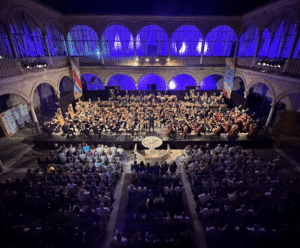
The second is that it coincides with the Jubilee Year of San Juan de la Cruz, which makes Úbeda a destination for cultural and spiritual pilgrimage. Combining the gastronomic experience with the jubilee proposal, with the activities of the Music and Dance Festival that is also presented this year at FITUR, creates a very complete package of experiences.
The third is the quality of the new oil. The Days begin just after the harvest, when the oils of the season are freshly made and at their optimum point of freshness, aroma and flavour. Tasting new oil in the middle of the campaign, visiting oil mills in operation and seeing how that oil is integrated into Renaissance dishes is an experience that can only be lived at this time of year.
The Gastronomic Days in the Renaissance are, in essence, a declaration of principles about what type of tourism Úbeda wants. It is not mass tourism, it is not heritage fast food, it is not a low-cost experience.
It is quality, reflective, cultural tourism, which requires time to be enjoyed. It is a commitment to gastronomy as a gateway to the heritage, history, identity of a territory. It is trusting that there are travelers willing to invest time and money in authentic, deep, differential experiences.
And twenty-five years later, the bet has proven to be a winner. The Conference has established itself as a quality brand, as a long-awaited event, as an essential event in the national gastronomic calendar. They have served to deseasonalize tourism, to attract a different public to the summer one, to position Úbeda as a first-class gastronomic destination.
The Conference lasts a month and a half, but it is advisable to plan ahead. Participating restaurants tend to get crowded, especially on weekends and on special dates. Booking a table in advance is essential if you don’t want to run out of space.
Ideally, you should dedicate at least two full days to the experience. One day to do the restaurant route, another for complementary activities: visit to the oil mill, oil tasting, walk through the historic center to contextualize the gastronomic proposal.
If you can extend your stay, all the better. Úbeda has museums, monuments, craft shops, routes in the surroundings and a general atmosphere that begs to be savoured without haste. Combining the Days with the activities of the Jubilee Year, with a concert of the Music Festival, with a route through the Sierra de Cazorla, makes the getaway a much more complete experience.
Dates: January 30 to March 15, 2026
Participating restaurants: 11 establishments in Úbeda (see full list in turismodeubeda.com)
Reservations: Directly at each restaurant, recommended 1-2 weeks in advance
Parallel activities: tastings, visits to oil mills (check calendar on the official website)
Twenty-five years are nothing… Or are they everything
In the gastronomic world, where fashions change at breakneck speed and concepts burn out in one season, that an event maintains its essence for twenty-five years is exceptional. The Gastronomic Days in the Renaissance of Úbeda have achieved this because they have never betrayed their original idea: to make living history a contemporary pleasure.
They have not fallen into the temptation of easy picturesqueness, of dressing up as a period or turning the experience into an animated show. They have maintained the seriousness of the research work, the rigor in the execution, the respect for the local product and the desire to offer haute cuisine with identity.
And that’s what we’re celebrating this year. Not only twenty-five editions, but twenty-five years of coherence, of a job well done, of love for the territory and its traditions. Twenty-five years of proving that the past can be delicious if cooked with talent.
Welcome to the Renaissance table. The banquet has just begun.